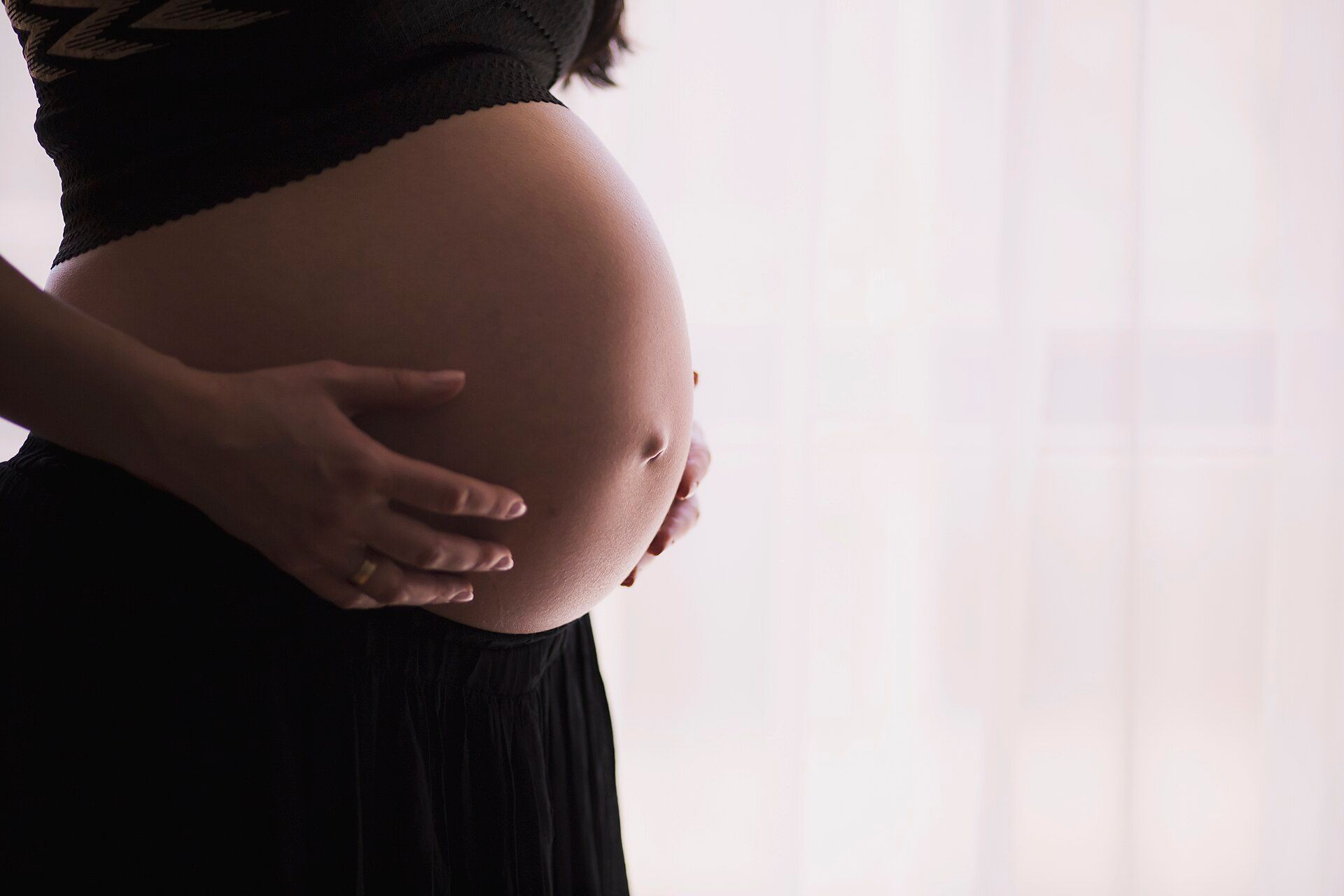
Why does the pelvis hurt during pregnancy?
During pregnancy, hormones soften the ligaments of the pelvis to prepare for the birth. At the same time, the bump grows, your centre of gravity moves forward and your lower back arches. The joints of the pelvis, at the front (the pubic bone) and at the back (the sacroiliac joints), work harder and can become painful.
This is known as pregnancy-related pelvic girdle pain. It is felt at the pubic bone, at the back of the pelvis or in the buttocks, and often gets worse when walking, climbing stairs, turning over in bed or standing on one leg.
How can osteopathy help?
When one joint of the pelvis moves less well than the other, the body compensates: one side locks up, the surrounding muscles tighten, and pain sets in. Osteopathy aims to rebalance how it all works.
What I look at
- the mobility of the pubic bone and the sacroiliac joints at the back of the pelvis;
- the lower back, hips and buttock muscles;
- your posture, which changes month by month;
- with sciatica, what may be irritating the nerve along its path.
What I work on
With gentle techniques suited to pregnancy, I restore mobility to the pelvic joints, release the lower back and buttock muscles, and work on the hips. You lie on your side, sit or half-sit, with cushions: never on your front.
What you can expect
The aim is to relieve pain, walk more comfortably and sleep better. I also show you simple everyday techniques: how to get out of bed, climb stairs, sit down and carry things without straining your pelvis.
And sciatica during pregnancy?
Pain running into the buttock or the back of the leg is common during pregnancy. It usually comes from the pelvis and buttock muscles irritating the sciatic nerve, and more rarely from a slipped disc.
Some signs, however, need prompt medical advice: weakness in the leg, bladder problems or numbness around the genitals.
What can I do day to day?
A few habits often help:
- keep your knees together when turning over in bed or getting out of a car;
- take the stairs one step at a time, leading with the less painful leg;
- sleep on your side with a cushion between your knees;
- avoid carrying weight on one hip and standing for long periods;
- keep up gentle activity: walking, swimming, prenatal yoga, as advised by your midwife.
Tell your midwife or doctor about your pain: a pelvic support belt or physiotherapy may also be offered.
At the practice
We go over your pregnancy, your follow-up and exactly where it hurts: pubic bone, back of the pelvis, buttock, leg. I check there are no signs that should go to your maternity unit first. The session takes place on your side, sitting or half-sitting, with cushions. I work gently on the pelvis, lower back and hips, then we look together at positions and movements that ease you day to day.
Frequently asked questions
Is pubic pain normal during pregnancy?
It is common: hormones loosen the ligaments and the pelvis prepares for the birth. Tell your midwife or doctor, especially if it makes walking difficult.
When can I come?
At any point in your pregnancy, as soon as the discomfort starts. Techniques and positions adapt to each trimester.
Will the pain continue after the birth?
Most often it eases markedly in the weeks after the birth. If it persists, talk to your midwife or doctor; osteopathy can also support you after the birth.
Is it reimbursed?
Most top-up insurers (mutuelles) and many international insurers cover part of the cost of osteopathy: check with yours. The French national health insurance (Sécurité sociale) does not reimburse it.
Sources
Page updated on 11 October 2026.